



Beyond Coagulation: Achieving Regulatory Compliance with NSF-Certified PolyDADMAC in High-Purity Drinking Water Systems
In municipal drinking water purification, the margin for chemical variance is entirely non-existent. While traditional inorganic coagulants like Polyaluminum Chloride or Alum effectively drop out bulk suspended solids, modern high-throughput water plants increasingly rely on highly charged organic polymers to accelerate flocculation, clear stubborn colloidal turbidities, and compress total sludge volume. Among these advanced chemical alternatives, PolyDADMAC stands out as the global industrial benchmark for rapid charge neutralization.
How transitioning a high-charge polymer from standard industrial wastewater processing into potable drinking water treatment infrastructure introduces a complex matrix of global regulatory hurdles. The core challenge for formulation engineers and municipal procurement heads is not merely settling performance; it is managing trace chemical impurities, specifically the residual raw monomer Dimethyl Diallylammonium Chloride and related synthesis byproducts. Meeting these international limits requires selecting a supplier capable of managing the chemical pathway from raw single monomer up to the finished macromolecule.
The Kinetic Boundaries of Monomer Conversion
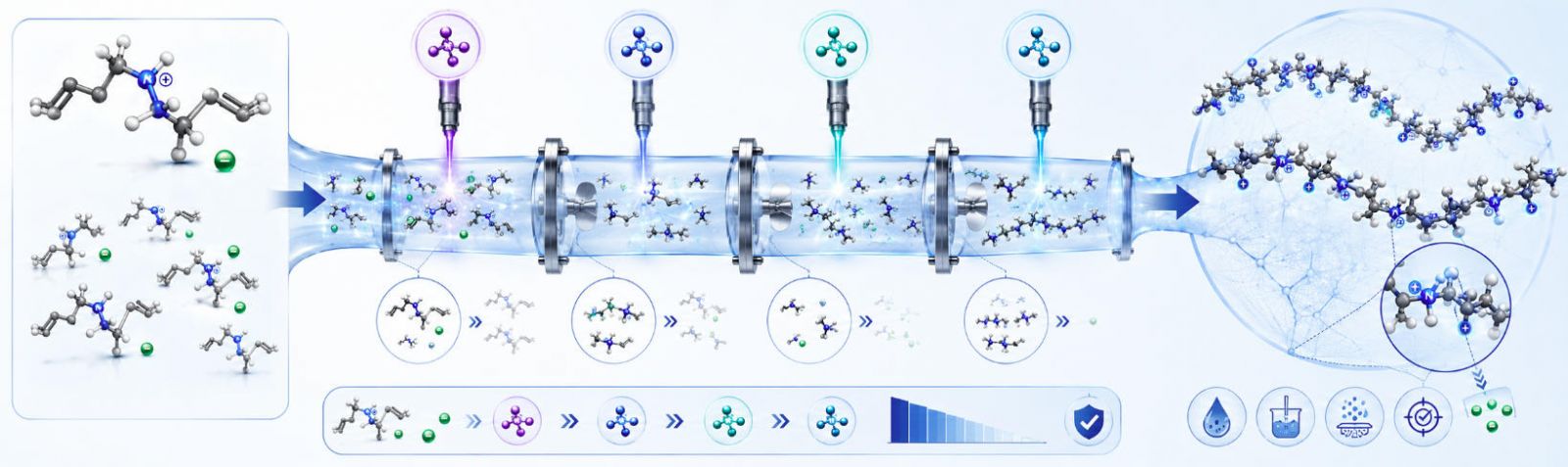
The industrial synthesis of PolyDADMAC proceeds via the radical polymerization of liquid Dimethyl Diallylammonium Chloride monomers. During large-scale manufacturing cycles, achieving complete 100 percent conversion is chemically difficult. A minor fraction of unreacted monomer inevitably remains trapped within the resulting macromolecular network. When deployed into active drinking water filtration facilities, these unreacted fragments present immediate regulatory compliance problems.
International regulatory organizations under the NSF/ANSI Standard 60 and European REACH frameworks enforce strict parts-per-billion ceilings on leachate concentrations inside consumer water networks. High levels of free monomers can interact unfavorably with secondary disinfection loops, such as chlorination channels, creating risks of secondary disinfection byproducts. To bypass these operational failures, advanced production facilities must utilize specialized catalyst feeds and elongated thermal processing times to reduce free monomer fractions below strict regulatory compliance limits.
Evaluating Polyquaternary Formulations Across Critical Industrial Applications
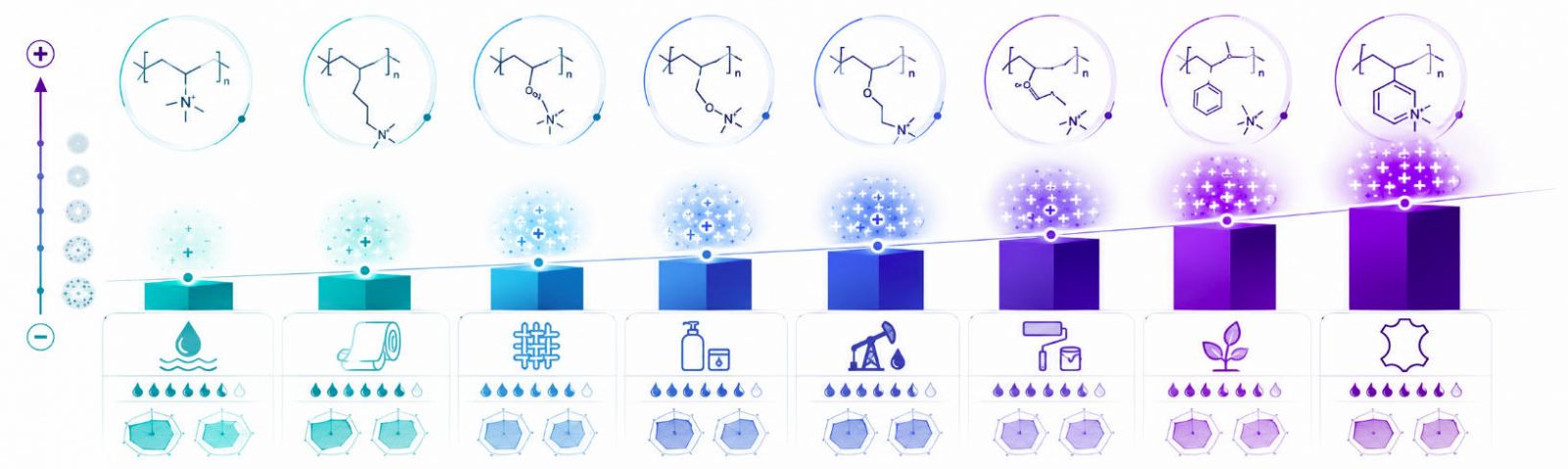
Selecting the appropriate grade of water-soluble quaternary ammonium polymers depends heavily on balancing targeted charge densities and viscosity behaviors against application-specific purity mandates.
For drinking water production, utilizing highly purified, low-monomer variants ensures safety compliance without losing flocculation speed. For applications like textile processing, integrating specialized aldehyde-free color fixing agents provides reliable dye fastness without environmental hazards. Meanwhile, when compounding consumer products such as hair or skin cosmetics, utilizing specialized polyquaternary ammonium salt configurations ensures smooth film formation and excellent surface substantivity.
| Chemical / Product Group | Core Molecular Function | Primary Target Field | Key Regulatory Certifications |
|---|---|---|---|
| PolyDADMAC (Drinking Water Grade) | High Cationic Charge Neutralization | Municipal Drinking Water Coagulation | NSF/ANSI 60, EU REACH, ISO 9001 |
| PolyDADMAC (Industrial Grade) | Colloidal Destabilization & Settling | Industrial Wastewater, Oilfield Flooding | EU REACH, ISO 14001, Industrial Benchmarks |
| Dimethyl Diallylammonium Chloride | Core Monomer Base (60% / 65% Purity) | Raw Synthetic Material for Polymers | EU REACH, T/ZZB 3886-2024 Standard |
| Aldehyde-Free Color Fixing Agent | Ternary Copolymer Dye Immobilization | Textile Printing and Dyeing Auxiliary | Patents CN115748271B & CN115677927B, GOTS |
| Polyamine Water Treatment Agent | Epichlorohydrin-Dimethylamine Copolymer | Decolorization & Organic Matter Removal | NSF Certification, EU REACH |
| Polyquaternary Ammonium Salt-6 / 7 | Cationic Substantivity Conditioning | Daily Personal Care Cosmetics & Shampoos | ZDHC Certification, Cosmetic Compliance |
| Rapid Penetrating Agent T | Sodium Polycuronate Wetting Control | Textile Processing, Leather Treatment | High-Efficiency Penetration Standards |
The Supply Chain Security of Independent Monomer Control
Achieving consistency in high-purity polymer manufacturing requires maintaining deep control over raw material inputs. Many blending facilities rely on third-party monomer supplies, exposing their finished polymers to batch-to-batch variations, trace heavy metal contaminants, and sudden supply interruptions. True chemical stability requires a vertically integrated production setup.
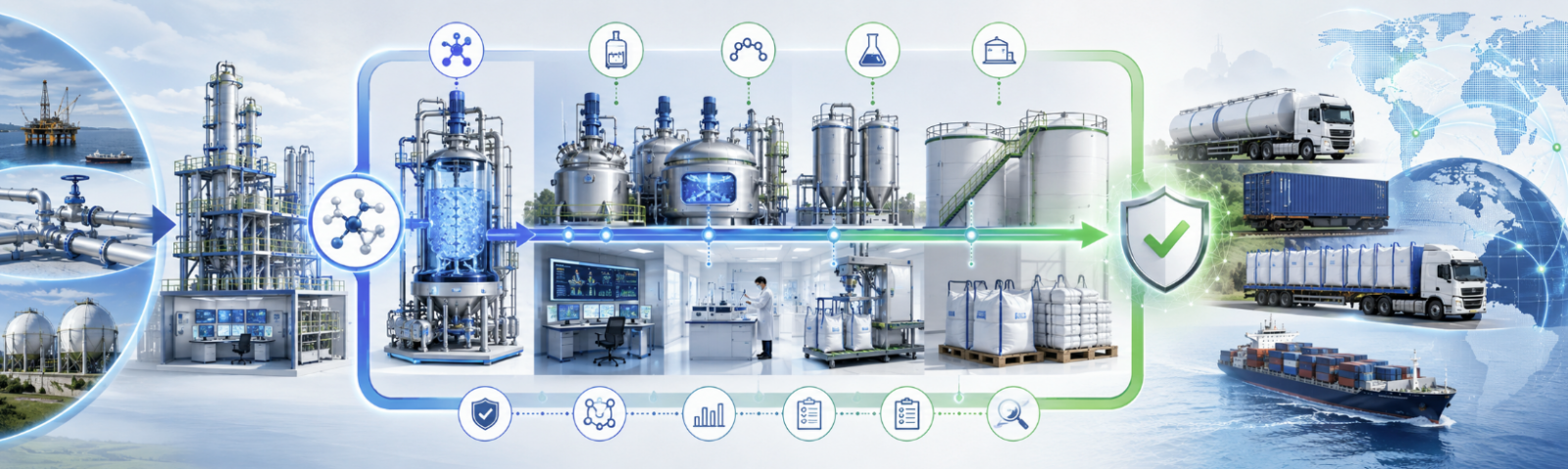
When a manufacturer controls the synthesis of the underlying Dimethyl Diallylammonium Chloride monomer internally, they can precisely regulate the molecular weight distribution from the very start. This chemical precision ensures that downstream products, including the specialized polyquaternary ammonium salt-7 and polyamine series, perform reliably in aggressive industrial applications like oilfield drilling, paper making, and municipal water purification.